McDonalds Goes AI-Powered: The Fast Food Industry May Never Be the Same Again
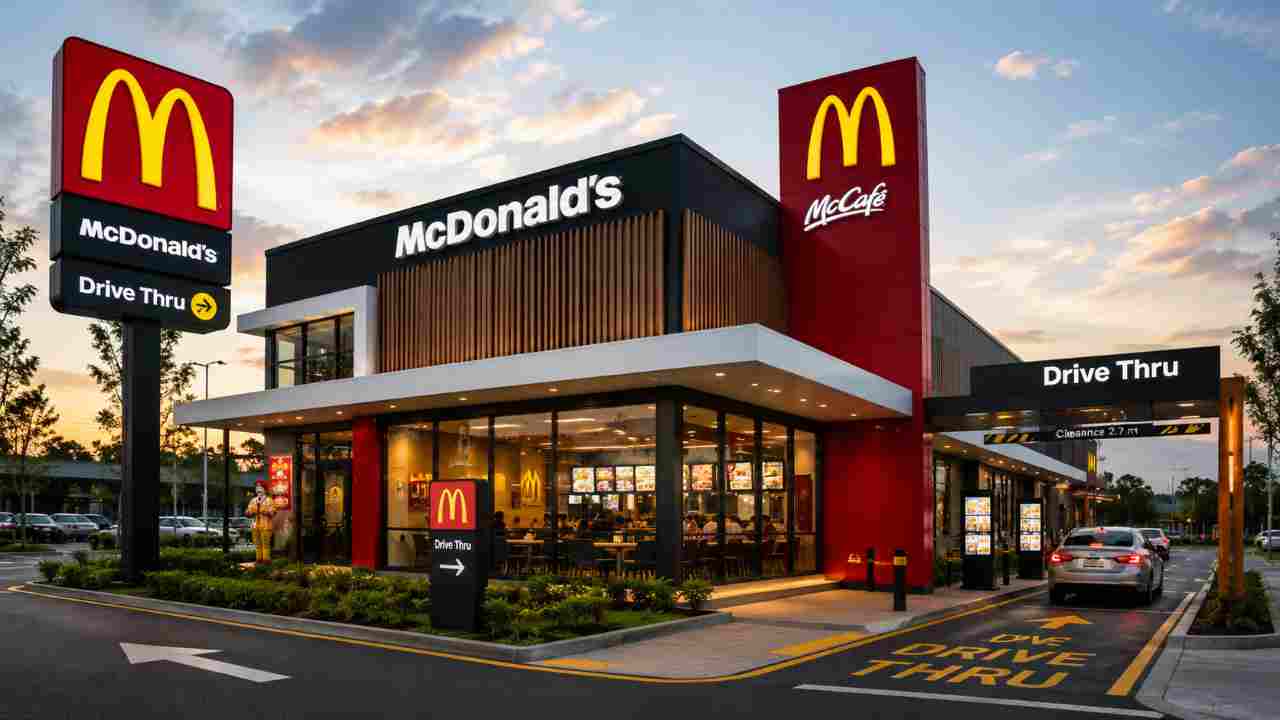
Aydul.com – Artificial Intelligence (AI) is no longer just a futuristic technology. Over the past few years, AI has transformed the way people work, shop, and enjoy everyday services. Now, one of the world’s largest fast-food chains, McDonald’s, is accelerating this transformation by implementing various AI-based systems across its operations. This move proves that the AI revolution is not only happening within technology companies like Google or OpenAI, but is also expanding into the food and beverage industry that serves millions of customers every day.
Why Is McDonald’s Investing Heavily in AI?
Every day, McDonald’s serves tens of millions of customers across different countries. With such a massive transaction volume, efficiency becomes an extremely important factor. Even slight delays in the ordering process or mistakes in the kitchen can impact the overall customer experience. Through AI technology, McDonald’s aims to overcome these challenges. AI systems are used to help take orders, predict operational needs, optimize food inventory, and monitor kitchen equipment performance in real time. In some locations, AI is even applied to drive-thru services, where the system can understand customer voices and automatically convert them into orders without human intervention. This technology is designed to speed up service while reducing the long queues that often occur during busy hours.
From a Restaurant Chain to a Data-Driven Company
The biggest transformation taking place is not merely the use of AI for taking orders. McDonald’s is gradually evolving into a company that uses data as the primary foundation for decision-making. Every transaction can be analyzed by the system to understand customer behavior patterns. For example, which menu items are purchased most frequently at certain hours, which products are commonly bought together, and even how weather conditions can influence sales. With this information, AI can help provide more relevant recommendations to customers while also assisting management in optimizing restaurant operations. This approach demonstrates how data has become a crucial asset in modern business. Decisions are no longer based solely on intuition, but also on more accurate and measurable analysis.
The Connection Between AI and the Philosophy of Minimalism
Interestingly, McDonald’s AI adoption trend has a strong connection to the principles of modern minimalism. Many people understand minimalism as an effort to reduce the number of possessions they own. However, in a broader context, minimalism is about eliminating things that do not provide value so energy can be focused on what truly matters. The same concept is applied in the use of AI. McDonald’s does not use AI to increase operational complexity. Instead, the technology is intended to reduce repetitive tasks, speed up time-consuming processes, and minimize unnecessary errors. In other words, AI helps companies create systems that are simpler yet more effective. In an increasingly complex world, this approach is becoming more relevant. Many organizations are beginning to realize that productivity is not about working harder, but about working smarter through automation and process simplification.
Challenges That Still Need to Be Addressed
Although AI offers many promising benefits, its implementation does not always run smoothly. Some of McDonald’s previous AI drive-thru trials received criticism because the system misunderstood customer orders. Mistakes like these show that the technology still has limitations, especially when dealing with various accents, dialects, or noisy environments. In addition, concerns have emerged regarding the future of the workforce. Some people worry that increasing automation will reduce the need for human employees. However, McDonald’s has emphasized that AI is used as a support tool rather than a complete replacement for humans. Employees still play an important role in ensuring service quality, handling complex situations, and providing the personal touch that machines cannot deliver.
The Future of the Fast Food Industry
What McDonald’s is doing today is most likely just the beginning. In the coming years, AI usage is expected to become even more widespread in the fast-food industry. Customers may see more automated ordering systems, more personalized menu recommendations, smarter inventory management, and kitchens capable of operating with significantly higher efficiency. For consumers, these changes mean faster and more accurate service. Meanwhile, for companies, AI becomes a tool to increase productivity while reducing resource waste. Ultimately, McDonald’s move demonstrates that the future of business depends not only on technological innovation, but also on the ability to simplify complex processes. This is where AI and minimalism intersect: both aim to eliminate unnecessary elements so focus can be placed on what truly matters.
Sources:
Reuters, LiveMint, New York Post, TechSpot, PYMNTS, Southern Living, EatHealthy365, and QSR Pro
COMMENT

RELATED POST

Minimalist Productivity System for Entrepreneurs

Best Minimalist Business Ideas in 2026 That Actually Make Money (Start With Almost Zero Capital)

7 Best Minimalist Business Ideas in 2026 for Beginners Who Want Simple but Profitable Income

Why IKEA Furniture Is So Popular: The Power of Minimalist Design Explained
Subscribe Me
Get notified when new articles are published