Modern Life Feels Too Full — This Japanese Philosophy Taught Me to Slow Down "Ma Philosophy"
Aydul.com - In today’s fast-moving modern era, everything feels incredibly easy to access. If we want information, we just open the internet. If we want entertainment, we simply scroll through social media. Even buying things now only takes a few clicks. Everything feels practical and instant. But without realizing it, that convenience often makes life feel overly full. Sometimes we buy things only because we are temporarily interested in them, and in the end, they pile up in our rooms unused. Not to mention our minds being filled every day with endless news, videos, notifications, and information coming nonstop through digital distractions. It feels like there’s no empty space left just to breathe and feel calm. Personally, I think modern progress brings many benefits, but anything excessive is usually not good either.
- Too many belongings make a room feel crowded
- Too much information makes the mind feel exhausted
- And too much busyness sometimes makes us forget how to enjoy life.
That’s why I became interested in one Japanese philosophy that feels simple yet deeply meaningful to me, the philosophy of “Ma.” This philosophy teaches about empty space, pauses, and balance in life. It may sound strange because we usually think empty space is something that should always be filled. But in Japanese culture, empty space is considered important. They believe not everything has to be full. Sometimes, it is precisely from emptiness that we can find peace.
What Is the Philosophy of Ma?
In Japanese, “Ma” is written with the kanji 間, which means space, pause, or interval. But its meaning goes beyond physical emptiness. The philosophy of Ma is about creating space between things in life. Japanese people believe silence, pauses, and emptiness have their own value. For example, in conversations, not every moment needs to be filled with endless talking. Sometimes a brief silence actually makes the atmosphere feel more comfortable. The same applies to daily life. Not every moment has to be packed with activities. Not every corner of the house has to be filled with objects, and not every thought has to constantly keep working. The philosophy of Ma teaches that empty space does not mean emptiness in a negative sense, but rather a place to breathe.
Why Is This Philosophy So Relevant Today?
When you think about it, modern life rarely gives us time to pause. From the moment we wake up, we immediately check our phones, work while opening social media, and even at night we still think about work or responsibilities. Even during rest, our minds still feel tired, right? Nowadays, many people feel like they always have to stay productive. If they relax for a moment, guilt starts to appear. But humans are not machines. In my opinion, the philosophy of Ma feels incredibly relevant because it reminds us that rest is also important. Being silent for a moment does not mean laziness. Reducing something does not mean lacking. Sometimes we become so busy chasing many things that we forget to enjoy our own lives.
Ma in Japanese Life
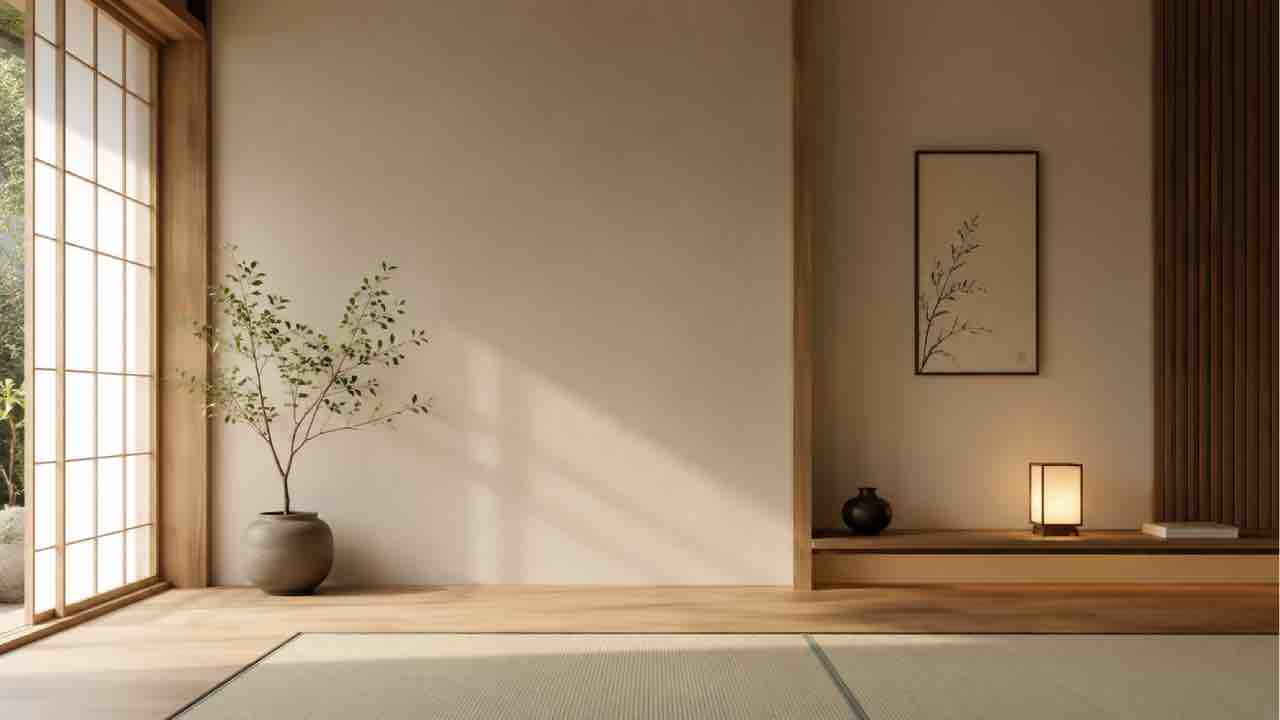
What’s really interesting is that the philosophy of Ma is not just theory, but something deeply applied in Japanese culture. If we look at traditional Japanese homes, the designs are usually simple and not overloaded with furniture or decorations. There is a lot of empty space that makes the atmosphere feel spacious and peaceful. The closest example around us is often hotels. When we first enter a hotel room, what we feel is calmness and openness. Japanese people also love using natural lighting and natural elements to make homes feel more comfortable, such as:
- Natural sunlight entering the room
- A few plants placed inside the room
This concept helps people inside feel more relaxed. Besides architecture, the philosophy of Ma can also be seen in Japanese art. In Japanese paintings or calligraphy, there are often empty areas intentionally left blank. Those spaces are not unfinished parts, but part of the beauty itself. The same thing exists in traditional Japanese music. Silence between notes is considered important because it gives listeners space to feel emotions. What I learned from Ma in Japanese culture is that something does not always need to be crowded or full to appear beautiful. Sometimes emptiness itself creates beauty and peace.
Modern Life That Feels Too Full
Compared to life today, it really feels like we live in an overly crowded world. Social media constantly makes us feel like we must follow trends. We easily buy things because we are afraid of missing out. Sometimes it’s not because we truly need them, but simply because we see other people having them. In the end, our rooms become full of stuff, but our hearts still feel empty. It’s not only about physical things, our minds are often overloaded too. Every day there is new information, new news, new drama, and it all continuously enters our heads. Without realizing it, we rarely give ourselves time to simply exist. I feel this is one reason why many people today easily become stressed, burned out, and unable to enjoy small moments in life.
Learning to Create Space
From the philosophy of Ma, I learned one important thing: life does not always have to be full. Sometimes we need to create space. Space to rest. Space to stay silent. Space to think. Space to enjoy life without rushing. A simple example is trying to sit quietly without opening your phone for a while. Enjoy the surroundings. Listen to the sound of rain, wind, or the quietness of the night. At first, it may feel strange because we are so used to staying busy all the time. But eventually, we begin to realize that peace is actually very important. Besides that, we can also start reducing things that are unnecessary. For example, items that only fill the room, relationships that mentally drain us, or the habit of endless scrolling without purpose. By creating space, life starts to feel lighter.
The Philosophy of Ma and Minimalism
Many people connect the philosophy of Ma with minimalism, and honestly, I think they are closely related. Minimalism does not mean living with as little as possible or being stingy toward yourself. It is more about choosing what truly matters. Sometimes we keep too many things that no longer have meaningful value. Eventually, the room feels crowded and the mind feels full as well. Once we begin removing unnecessary things, the atmosphere suddenly feels more spacious. Strangely enough, the heart also feels calmer. The same applies to life. We do not have to follow every trend. We do not always need to stay busy. We also do not need to please everyone. By reducing unimportant things, we create more room for what truly matters.
The Importance of Pauses in Life
One part of the philosophy of Ma that I love the most is the idea of pauses. In today’s world, pauses are often seen as something negative. But actually, pauses are where we can finally breathe. Imagine if music had no pauses at all. Every note would play continuously without stopping. It would only become noise.
The same goes for life.
If we keep moving nonstop without resting, eventually we become exhausted ourselves. A pause does not mean stopping forever. Sometimes we only need to slow down for a moment so we can feel calm again. The Japanese philosophy of Ma teaches something simple yet deeply relevant for modern life: not everything needs to be full. In a world that keeps moving quickly, we often forget that humans also need space to breathe. Empty space does not mean emptiness, but rather a place where peace can be found.
Through this philosophy, I learned that life is not about owning as much as possible or doing everything at once. Sometimes, by reducing things, we can enjoy life more deeply. Starting from reducing unnecessary belongings, reducing distractions, and giving ourselves time to stay silent for a while. Because in the end, peace often comes not when life is completely full, but when we have enough space to truly enjoy every moment. So that was the philosophy of Ma, something I believe is very important to learn. I hope this article can be useful for you. If you want to learn more about Japanese minimalism and philosophy, you can visit Aydul.com. There are many articles available there, and I’m also planning to release a Japanese Minimalist Series book in the future. Hopefully, it can happen soon.
Sources for this article:
- YouTube: Dan Le Gris | What Is Ma (間)? The Hidden Meaning Behind Japanese Minimalism
- YouTube: Azumi Uchitani | The Beauty of Silence: The Japanese Concept of Ma Explained
COMMENT

RELATED POST



Subscribe Me
Get notified when new articles are published